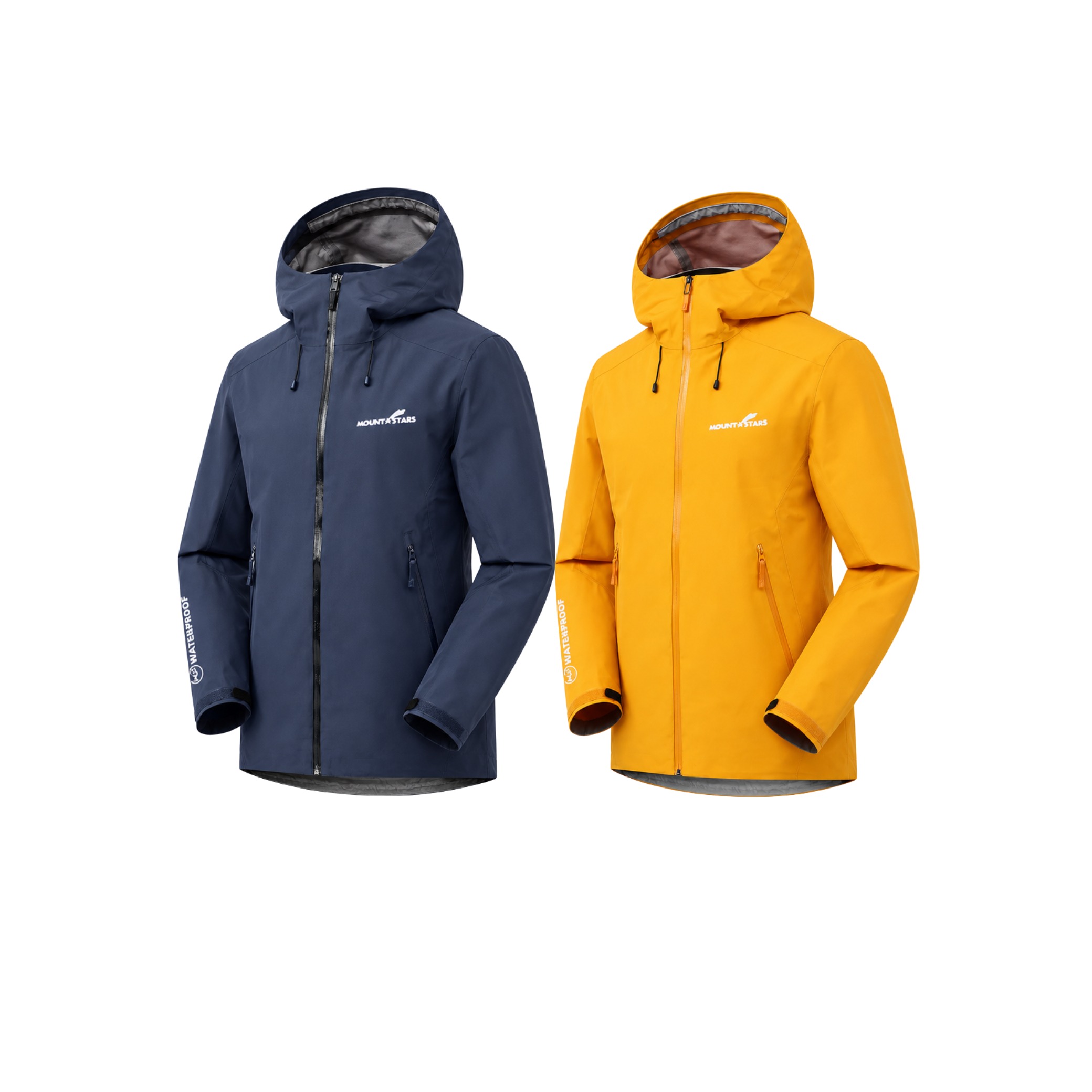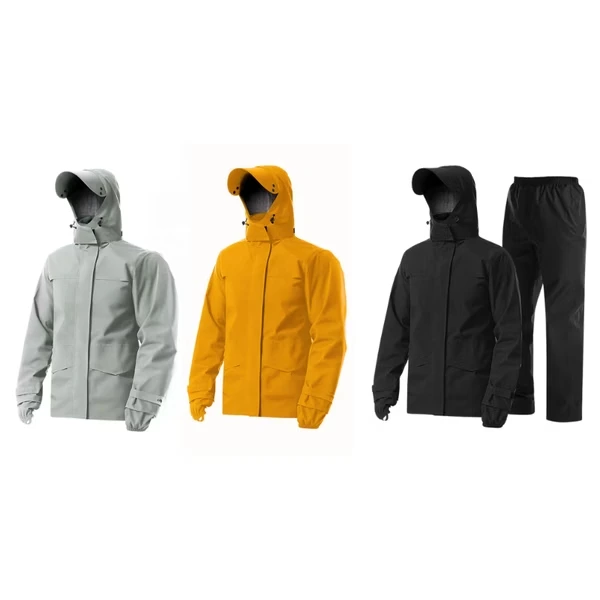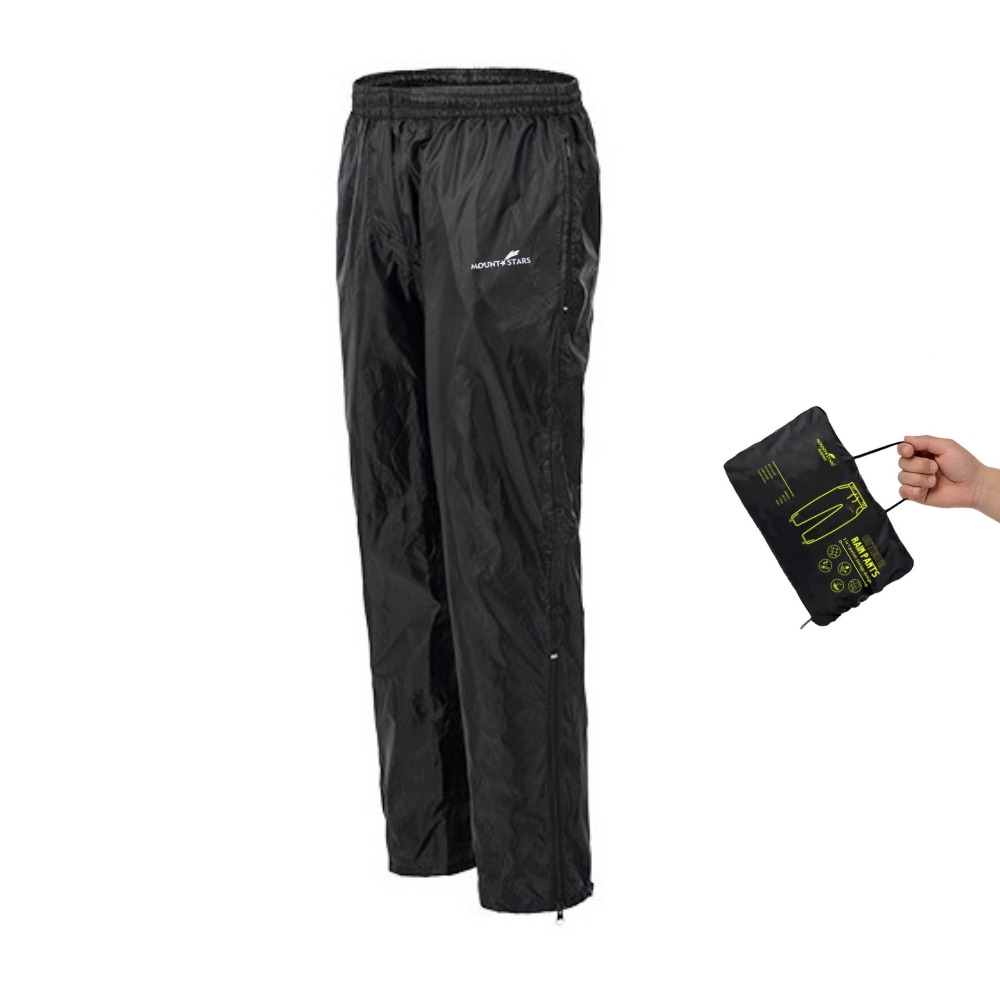
Start with your route and rainwear setup
For a day hike, hut stay or tent trip, check duration, elevation gain, forecasts and shelter options. Conditions vary even between day hikes. A single water-resistance figure cannot determine suitability.
Plan protection for your legs as well as your upper body. Review what you own before choosing a jacket, full suit or rain pants.
Read the test conditions behind the ratings
A 10,000mm rating does not automatically make a garment suitable for every hike. Seams, openings, wear and dirt also matter. Read the product’s specifications and precautions.
Compare breathability figures only when test methods and conditions match. Nominal figures on MOUNT STARS pages do not guarantee whole-garment performance. Do not treat unverified test conditions as equivalent to those of another product.
Move around with your layers on
Use actual measurements, not just your usual size label. With your planned layers on, raise and reach your arms and bend your knees. Check for pulling at the shoulders or waist and hems that restrict movement.
Test visibility with the hood up and adjust the cuffs and hem. An ankle zipper does not necessarily allow removal over shoes or mean that the zipper itself is waterproof.
Compare weight and packed size on the same basis
A jacket and a suit have different weights. Compare the same size and check whether a bag is included. Balance low weight with comfort, ease of use and necessary features.
Keep rainwear within easy reach. Practice packing it and putting it on before your trip so you know how it works.
Can hiking rainwear be used for motorcycling?
Water-resistance figures alone are not enough. Check coverage in a riding position, flapping, visibility and intended use. For motorcycling, choose equipment specifically intended for riding.