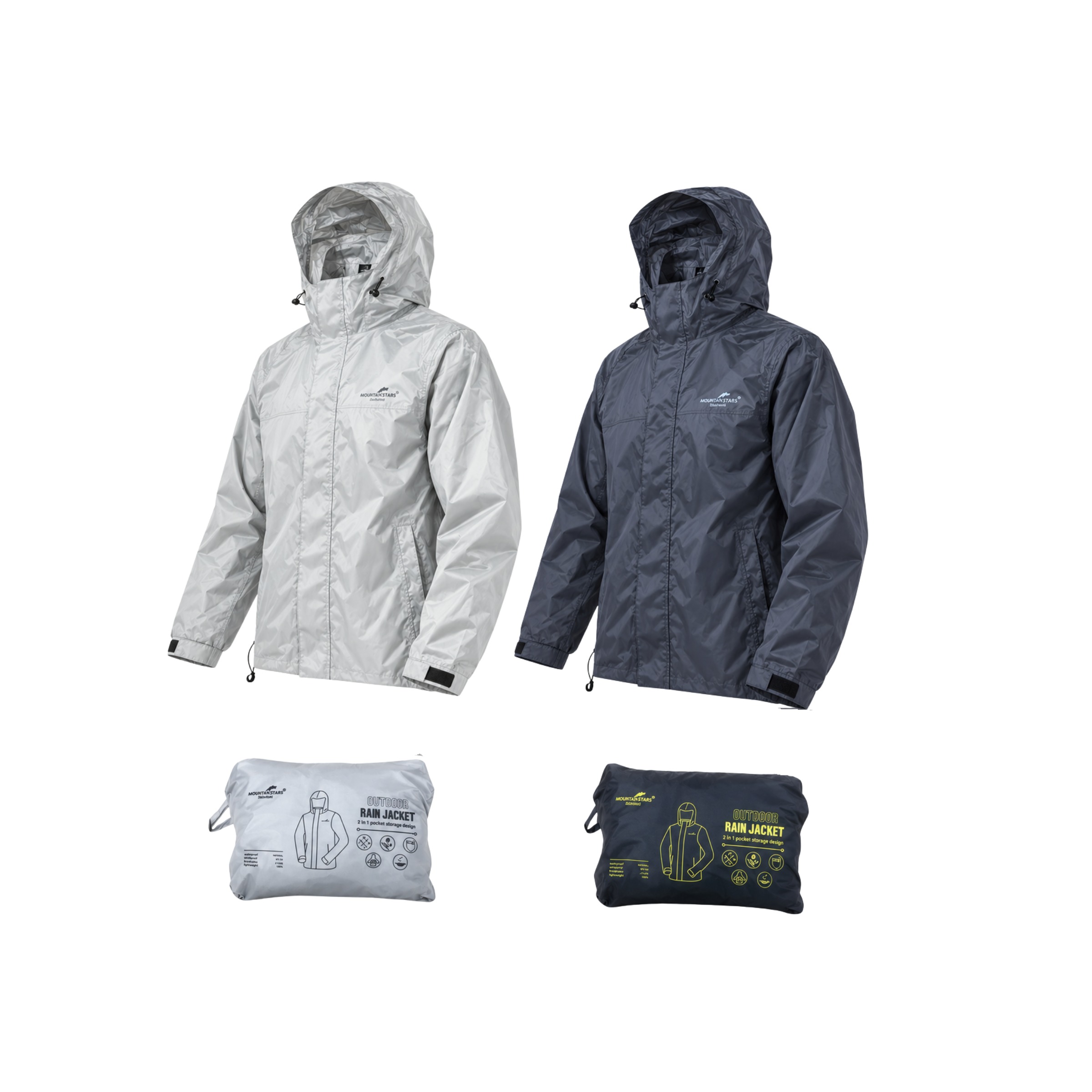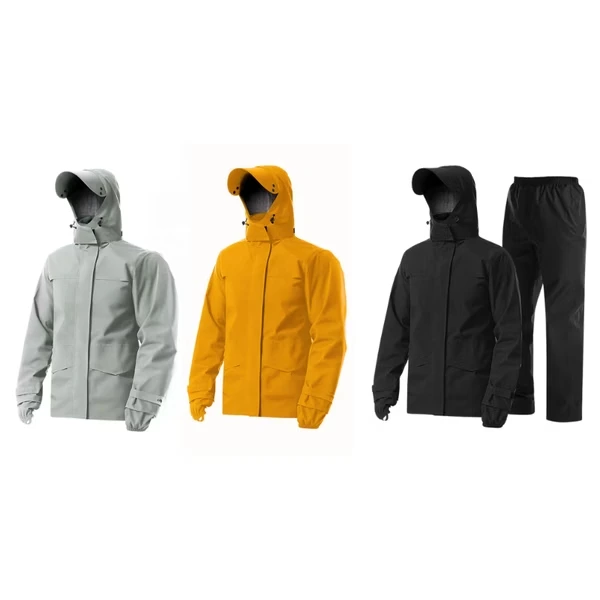
Waterproofing resists water entering
Membranes or coatings resist water entering fabric, but fabric alone does not determine a garment’s waterproofing. Check seams, zippers and the fit of hood, cuffs and hem.
The mm rating indicates the water pressure fabric withstands in a test. It is not rainfall volume or hours of protection, and cannot guarantee dryness in a particular storm.
Water repellency helps surface water bead off
A water-repellent finish reduces water spreading across the surface. Often called DWR, it does not by itself make a garment waterproof.
Wear, friction and dirt can reduce repellency and cause the face fabric to wet out. That does not necessarily mean a leak. Distinguish surface wetting from sweat and actual water entry.
Breathability lets water vapor pass through
Breathability here means water-vapor transmission, not air permeability or opening a zipper to ventilate. Sweat levels and temperature or humidity differences can still leave clothing clammy.
Breathability may be stated in g/m²·24h. Check test methods and conditions as well as units. Figures with unknown methods cannot reliably rank comfort.
Put these three functions into practice
Check waterproof construction, repellent finish and breathability separately. Adjust hood and cuffs, manage layers and pace before overheating, and keep rain out when ventilating.
When beading weakens, care for the garment according to its label. A repellent treatment restores the surface finish; it does not repair holes or peeling waterproof layers.